Bridging fundamental physics, surface chemistry, and advanced engineering—featuring world-renowned pioneers in single-atom aberration-corrected microscopy, topological quantum computing, CVD graphene heterostructures, plasmonic neuro-technologies, and eco-friendly cultural heritage restoration.
In the days preceding our event, don't miss the MORE-TEM project conference, featuring our keynote speakers Prof. Haider and Prof. Suenaga as Principal Investigators. Discover MORE-TEM 2026 →
Targeting Bachelor's students, Master’s students, PhD candidates, and active researchers, this conference bridges high-level theoretical discoveries and transformative real-world applications across physics, chemistry, and engineering.
Our distinguished seminars explore the frontiers of modern nanoscience: from sub-Angstrom single-atom imaging and topological quantum computation with Majorana fermions, to CVD graphene & terahertz polaritonics, 3D plasmonic neuro-biosensors, and eco-friendly nanorestoration of cultural heritage.
Gain practical experience in cutting-edge AFM microscopy, nanomedicine formulation, and plasmonic simulations.
Engage directly with speakers during dedicated Q&A sessions, organized coffee intervals, lunches, and the scientific aperitif.
Hosted at Sapienza University's historic Aula Amaldi, bringing together top minds across Europe and Japan.
A concise two-day overview — from morning seminars to afternoon workshops and labs.
Alternating comprehensive seminars (40-min talk + 10-min Q&A) with practical hands-on sessions.
The frontiers of atomic investigation and the control of light and matter.
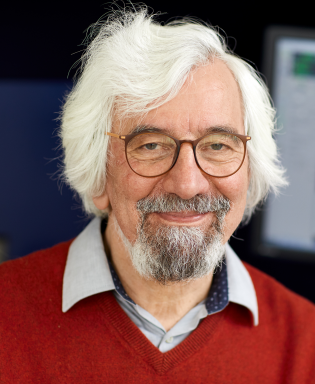
Maximilian Haider
CEOS
GmbH & Karlsruhe Institute of Technology (KIT), Germany
Kazu Suenaga
Osaka
University & AIST, Japan
Alessandro Tredicucci
Università
di Pisa & NEST - CNR-NANO, Italy
Carlo Beenakker
Leiden
University, The Netherlands
How we design new materials and how nanotechnology saves our past.
Camilla Coletti
Istituto
Italiano di Tecnologia & CNI@NEST, Italy
Gabriella Di Carlo
CNR-ISMN, Italy
From fluid control on a nanometric scale to applications for human health.
Francesco De Angelis
Istituto
Italiano di Tecnologia (IIT), Italy
Giulia Serrano
University
of Florence, Italy
Parallel practical sessions and in-depth technical seminars running simultaneously (15:00 - 18:00).
Renowned pioneers, inventors, and prize laureates shaping the future of matter and light.

Pioneered aberration-corrected electron microscopy, enabling atomic-scale visualization of materials. Principal Investigator of the MORE-TEM project.

Pioneer in single-atom imaging and electron energy-loss spectroscopy in low-dimensional nanomaterials. Co-investigator of the MORE-TEM project.

Works at the intersection of terahertz physics and quantum optics. Contributed to the development of the first Terahertz Quantum Cascade Laser.

Theoretical physicist with broad contributions to mesoscopic physics, quantum transport, and topological superconductors hosting Majorana fermions.

Leads research on scalable CVD synthesis of graphene and 2D heterostructures for applications in photonics and electronics. Coordinator of IIT Graphene Labs.

Researches nanostructured coatings and surface chemistry with applications in the conservation and eco-friendly restoration of cultural heritage.

Works on 3D plasmonic nanostructures, nanopore technologies, and optical biosensors with applications in neuroscience and genomics.

Studies molecular magnetism and the behaviour of Single-Molecule Magnets on functional surfaces, with implications for quantum technologies.
Select your preferred experimental or computational laboratory on our dedicated Workshops Page to guarantee hands-on instrument access.
Hands-on scanning probe microscopy to investigate surface morphology, structural evolution, and mechanical properties of quantum dots and semiconductors.
Design, synthesis, and characterization of advanced lipid/polymer nanocarriers and targeted drug delivery vesicles for innovative therapeutics.
Explore infrared and terahertz spectroscopy, characterizing plasmonics and light-matter interactions inside low-dimensional quantum well systems.
Investigate the optical and vibrational properties of 1D semiconductor nanowires using micro-Raman and photoluminescence spectroscopy.
Practical application of materials science to historical artifacts: synthesizing and applying eco-friendly protective nanocoatings.
Characterizing electronic and optical behavior of custom nanostructures for next-generation optoelectronic and photonic integrated circuits.
Perform theoretical simulations and quantum chemistry modeling of localized surface plasmon resonances in molecule-nanoparticle hybrids.
Present your cutting-edge research before world-renowned speakers, senior faculty, and international peers at Sapienza University of Rome.
We are the primary organizers and contact reference points for the conference, managing scientific sessions, submissions, and campus coordination.
Coordinated across Sapienza departments to ensure top technical rigor.
How to reach the Aula Amaldi at the main Sapienza University campus in Rome.